2026-08-31 · Brian
AC Electrical Problems in California: Breakers, Capacitors, and Wiring
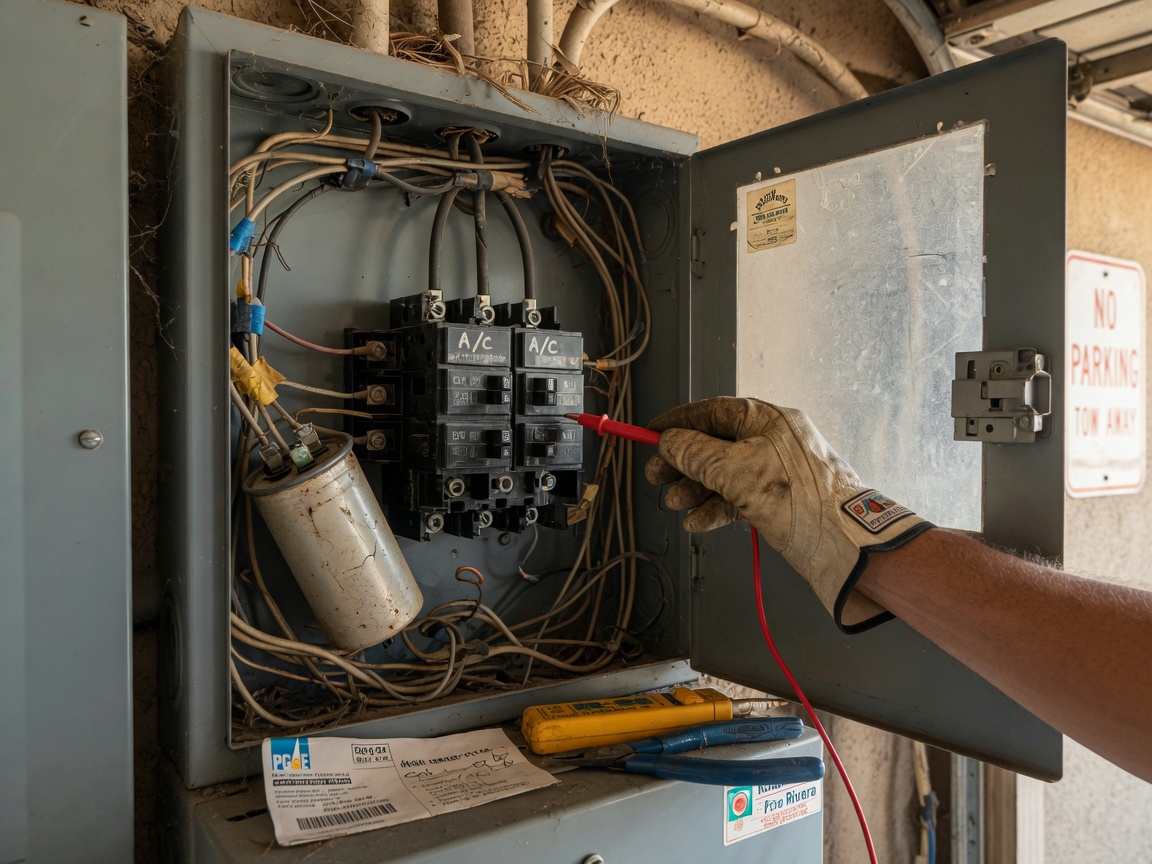
Homes in Pico Rivera often see breaker trips, capacitor failures, and wiring degradation after 8–12 years of heavy use during the hot-summer Mediterranean climate. These issues arise because air conditioners draw high amperage while fighting 90-plus degree afternoons near Whittier Narrows and Rio Hondo Park.
Breaker Problems in Local AC Systems
Pico Rivera homes built in the 1950s through 1970s typically use 100- or 150-amp panels that struggle when central air conditioners start up. A failing breaker can show as repeated trips on the outdoor disconnect or main panel during peak evening loads. Technicians check for loose lugs, heat marks, and improper double-tapping before replacing the breaker with a same-brand match rated for the unit’s RLA. In neighborhoods like Pico Rivera West, older aluminum wiring adds resistance that accelerates breaker wear. Residents in Montebello and Downey report similar patterns when units run nonstop from June through September. Regular inspection prevents sudden loss of cooling on the hottest days.
Capacitor Failures and Their Causes
Start and run capacitors in Pico Rivera systems commonly fail between years 5 and 10 because of heat buildup inside condenser cabinets placed in full sun. A bulging or leaking capacitor prevents the compressor from starting, leaving the fan running alone. Replacement involves matching microfarad and voltage ratings exactly, then testing amperage draw afterward to confirm the new part restored proper operation. Homes near the 605 freeway corridor experience extra dust that raises operating temperatures and shortens capacitor life. Technicians carry common 35/5, 40/5, and 45/5 dual-run capacitors on every truck to complete repairs the same day.
Wiring Issues Specific to California AC Installations
Corroded or undersized wiring appears frequently in Pico Rivera because many homes still have original 10- or 12-gauge circuits feeding 3- to 5-ton units. Heat, vibration, and occasional moisture near Rio Hondo Park degrade insulation and create high-resistance connections at the contactor and compressor terminals. Technicians torque all lugs to manufacturer specs and replace any wire showing discoloration or melted insulation. Upgrading to 8-gauge copper with proper conduit often resolves recurring trips when the original run exceeds 50 feet. Nearby Whittier and Downey properties show the same pattern when homeowners add larger equipment without updating the circuit.
Diagnostic Steps Used on Service Calls
Technicians begin every electrical diagnosis by verifying 240-volt supply at the disconnect, then measuring voltage drop under load. They next test capacitor microfarad values with a meter and inspect contactor points for pitting. If the breaker holds but the compressor will not start, they check for open windings or locked rotor amps exceeding nameplate. These steps isolate whether the problem is the breaker, capacitor, wiring, or the motor itself before any parts are ordered.
When to Schedule Professional Repair
California AC Pros maintains service hours Monday through Saturday 7am–10pm and Sunday 8am–9pm to handle electrical faults before they cause compressor damage. Homeowners noticing humming sounds, burning odors, or frequent breaker trips should call rather than reset repeatedly. Prompt attention protects the compressor and avoids emergency calls during weekend heat waves common in Los Angeles County. AC Repair Services and Emergency HVAC Repair teams carry the meters and common parts needed for same-day fixes in Pico Rivera.
Related Reading on Common AC Issues
For deeper coverage of short cycling and other electrical symptoms, see AC Short Cycling in California: Causes, Risks, and Repair Solutions and Common AC Problems in California Homes and How to Fix Them.